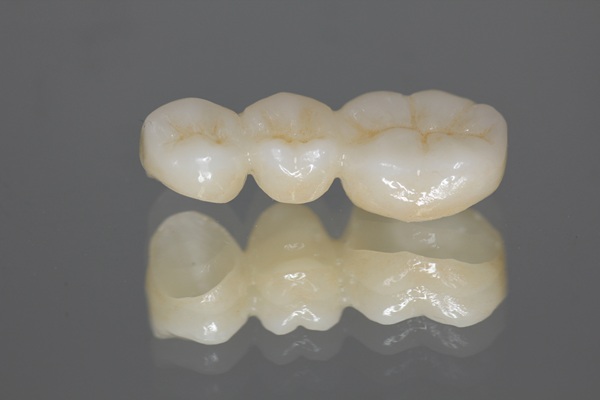
A dental bridge is a durable, fixed solution for those wanting to restore their smile after tooth loss. If you have a gap in your smile because of a missing tooth, you may have already noticed that eating and speaking feel less natural than they used to. Learning how a bridge addresses these problems can help you decide whether it is the right option for your smile.
How replacing missing teeth improves bite function
Missing any number of teeth can fundamentally change the mechanics of the jaw. When a gap exists, the neighboring teeth often begin to tilt into the open space. This shift can lead to misaligned bites, overcrowded teeth, and increased wear on the remaining enamel. In addition, the opposite tooth in the other arch may drift toward the gap. This can create uneven contact points that lead to jaw fatigue or headaches over time.
Beyond the physical movement of the teeth, a gap can impact speech clarity. Many common sounds require the tongue to make specific contact with the teeth; when that contact point is missing, pronunciation can become difficult or include a slight whistle. A bridge helps maintain the proper spacing and airflow so that the mouth functions as a cohesive unit when talking.
Dental bridges: What are they, and how do they work?
A dental bridge is a custom-made restoration that can fill the gap left by one or several missing teeth in a row. The bridge framework consists of an artificial tooth, known as a pontic, held in place by anchor points on either side of the gap. These anchors are typically natural teeth that have been fitted with dental crowns or wings, although dental implants can also serve as the foundation. The mission is to replace the missing tooth in a way that looks natural and feels strong enough for daily use.
The different options for a dental bridge
The process of selecting a dental bridge involves analyzing the health of the surrounding teeth and the specific hygiene requirements of the gap. With a thorough evaluation, a dentist can recommend which of the following designs could be the most reliable choice:
- Traditional. This design places crowns on the teeth flanking the gap to provide a sturdy anchor for the artificial tooth.
- Cantilever. This configuration uses a single anchor and is reserved for areas that do not experience heavy biting pressure.
- Maryland. This approach is often best for front teeth, employing metal or porcelain wings bonded to the back of adjacent teeth.
- Implant-supported. For larger gaps, this bridge uses dental implants as anchors.
For each of these dental bridges, the false tooth is crafted from materials like zirconia or porcelain-fused-to-metal (PFM). The exact material is chosen based on the required strength and the location of the missing tooth. Every bridge is custom-contoured and color-matched so that the new tooth blends perfectly with the existing smile.
Find out more about dental bridges
Replacing missing teeth is one of the most effective ways you can protect long-term bite function and self-confidence. A dentist can help you choose the bridge design that best fits your health history and your aesthetic goals. To explore your options, schedule an appointment today.
Request an appointment here: https://www.adlongdental.com or call Adlong Dental at (501) 406-0782 for an appointment in our Conway office.
Check out what others are saying about our dental services on Yelp: Dental Bridges in Conway, AR.
Related Posts
A traditional dental bridge can replace up to three or four consecutive teeth on the same side of a dental arch. It is one of the most common dental replacements you can get. Knowing how to care for it can help maintain your new smile for a long time. Here are some tips for ensuring…
Patients considering dental crowns may have concerns regarding the recovery period following the procedure. Fortunately, the typical recovery period is relatively quick and involves minor inconvenience. Most risks and complications resulting from the procedure are comparable to those of most dental procedures and therefore require similar precautions.The placement of dental crowns involves two stages, each…
A dental crown is one of the most common ways to have a tooth restored. However, patients may want to know why the process of restoration is needed. It is a good question that can easily be answered.Outlined below are a few times when a dental crown is necessary. Dental crown placement will not only address…
Gold dental crowns are a type of restoration that sits over the entirety of a severely decayed or damaged tooth. The purpose of these restorations is to provide much-needed support and protection to weakened teeth. Today, dental crowns come in a variety of materials, but once upon a time, gold was one of just a…